
Call Golden I Construction
Renovating a co-op apartment is not harder construction than renovating any other apartment. What is different is everything around the construction. You need the consent of the co-op corporation before an alteration is made, and that consent comes with an agreement, a review by the building’s own architect or engineer, insurance, deposits, working rules and a deadline. One renovation can easily become far more tedious for the client to handle than the work itself. That is why we take care of the whole thing, from start to finish.
Golden I Construction takes care of the design and the construction of your project, gets the board approval and the architectural plans in order, and checks back with your co-op through the job so that everything goes smoothly. We have been renovating in New York City since 2005. Golden I Construction Inc holds Home Improvement Contractor license number 2019617-DCA from the New York City Department of Consumer and Worker Protection, and we are insured.
This page is about what is particular to a co-op. The construction itself, the city’s permits and combining two apartments are on our apartment renovation page, and single rooms are on kitchen renovation and bathroom renovation.
Renovating in a co-op? Call us before anything goes to the board, and tell us what the building has given you.
Why a co-op is different
In a co-op you do not own your apartment the way a condo owner or a homeowner does. The state Attorney General’s office puts it this way: a purchaser buys shares in a corporation, the shares are allocated to a specific apartment, and owning them entitles the purchaser to a long-term proprietary lease for that apartment. You are a shareholder in, and a tenant of, the same corporation, and that corporation is governed by a board of directors elected by its shareholders.
The proprietary lease is where renovation begins. The model alteration agreement described below starts from a lease that provides, in substance, that no equipment is installed and no alterations are made in the apartment without the corporation’s consent. The state’s regulations on co-op offering plans also require a plan to say whether the shareholder is responsible for interior repairs and whether the corporation’s consent is needed for alterations or additions. So the first document to read is your lease, and the second is the one the building hands you when you ask to renovate: its alteration agreement.
The alteration agreement
Every building has its own alteration agreement, and yours is the one that governs. For a picture of what to expect, the New York City Bar Association’s Cooperative and Condominium Law Committee publishes a model alteration agreement for co-ops, with a commentary that sums up the procedure in five steps:
- Your architect or engineer draws up plans. You submit them with the signed agreement, a processing fee for the managing agent, a deposit toward the professional fees the corporation will incur, and a security deposit against damage.
- The corporation’s own architect or engineer reviews the plans. If that professional or the board requires changes, the plans are changed and resubmitted. When both are satisfied, the board consents in writing.
- Before work starts, the remaining conditions are met: the city’s permits where they are needed, the insurance, and the list of contractors.
- The work is carried out under the agreement and the building’s work rules.
- At the end, your architect or engineer certifies that the work was completed as approved and submits as-built plans, which the corporation’s professional reviews.
Two details of the model form are worth knowing early. Signing the agreement is not consent: only the written approval of the plans is. And once the plans are approved, the work may not be changed without written approval again, so the design has to be finished before it goes in.
Who is involved
| Who | Their part in a co-op renovation |
|---|---|
| The board of directors | Gives or withholds the corporation’s consent, in writing. In the model agreement a consent may be signed by an officer of the corporation or an authorized employee of the managing agent, and by nobody else. |
| The managing agent | Your first call. The agent hands out the current alteration agreement and work rules, may charge a processing fee, and is the corporation’s address for the paperwork. |
| The building’s architect or engineer | Reviews your plans and may require changes, may inspect the work as often as the corporation thinks necessary, and under the model form has the final word on whether a city filing is needed. The shareholder pays this professional’s fees. |
| The superintendent | Is told the start date in advance (at least five days in the model form), directs when the service elevator may be used, and may give directions on site that the agreement obliges you to follow. The superintendent cannot give consents. |
| Your architect or engineer | Draws the plans, files them with the city when a permit is needed, and certifies the finished work. |
| The contractor | Has to carry the insurance the building asks for, protect the halls and elevators, keep to the work rules and the deadline, and build what was approved. That is our part. |
| The Department of Buildings | Issues the permit when one is needed. Its online filing system adds the co-op board as a required party to a filing made in a shareholder’s name: a representative of the board has to confirm there that the board authorized the application before the filing can proceed. |
Insurance the building asks for
A co-op wants to see the insurance before anyone starts work. The model agreement shows the usual shape of the requirement: no work begins until the policies, or certificates of them, have been delivered to the corporation. Each contractor carries workers’ compensation, employer’s liability and disability insurance as New York requires, commercial general liability of $1,000,000, automobile liability of $1,000,000 and an umbrella policy of $3,000,000. The policies name the corporation, its officers, directors and shareholders, the building’s engineer and the managing agent as additional insureds, and they cannot be cancelled without ten days’ notice to the corporation. The shareholder carries general liability insurance of at least $1,000,000 as well, which may be part of a homeowner’s policy or a personal umbrella. A note to the form adds that a board may set higher amounts for a major renovation.
The figures in your own building’s agreement are the ones that count. Send us its insurance page at the start, so that what your managing agent requires is known before anything is submitted.
Work rules
Days and hours
The city allows construction between 7 am and 6 pm on weekdays. A co-op may set its own day inside that. The model agreement limits work to Mondays through Fridays, excluding holidays, between hours each building fills in, with noisy work starting later in the morning, no work on weekends, and jackhammers or other pneumatic tools only with the corporation’s written permission. Some buildings also have guidelines about the time of year when renovations can take place. One of our clients described how this went in his building:
Professionalism – Tony was highly responsive to all my calls and emails and was always kind and courteous, detailing even my most basic questions. My Coop has strict rules on construction between the hours of 9am and 5pm and the team was always within that window. Not only did I have zero complaints from the Building Staff, I was also told (unsolicited) that these were some of the best guys to do work in the building in 30 years.
Halls, elevators, dust and debris
The model form reads like a list of everything a neighbor might complain about. Building materials and debris may not be stored in the halls. The floor of the back hall is covered with construction paper, and the carpets, wall coverings and other finishes of the hallways and elevators are protected. Rubbish leaves the apartment in barrels or bags, by the service elevator only, at the times the superintendent directs, and no dumpster stays in front of the building overnight. Dust has to be kept out of the rest of the building, and if the corporation finds it unreasonable it may suspend the work until a solution is found. The same client wrote that with us even the hallways and elevators were kept clean, to minimize the impact on other residents.
The building’s systems
Under the model form a shareholder may not interfere with the building’s intercom, gas, electric, heating, air-conditioning or plumbing systems, may not penetrate an exterior wall, and must leave every water, steam and gas valve accessible during and after the work. If a valve ends up closed in behind a new wall, the corporation can have the enclosure removed at the shareholder’s expense. Access to those valves belongs in the design from the first drawing.
The deadline
Under the model form, the co-op’s consent letter names a start date and the date by which the work must be finished, with time of the essence. A shareholder who needs longer can have a limited extension only by paying the corporation a set amount for each additional working day, and the corporation alone decides when the work counts as complete. The schedule therefore has to be honest before the agreement is signed. We set a time frame at our first meeting, and our kitchen and bathroom timelines show what goes into it.
Who pays for what
| Cost | Where it falls under the model agreement |
|---|---|
| The building’s review | The shareholder pays the fees of the corporation’s architect, engineer and attorney for reviewing the plans and inspecting the work, even beyond the deposit paid in at the start. |
| Deposits | A security deposit and a review deposit, in amounts each corporation sets. The commentary says some co-ops ask for 1% of the projected cost of the alteration, with a minimum of $5,000, and others for a flat fee. What is not used is returned after completion. |
| Damage during the work | The shareholder is responsible for damage to other apartments and to the building caused by the work, whenever it becomes apparent, including cleaning or repairing the finishes of hallways and elevators. |
| Running past the deadline | A charge for each additional working day, in an amount the building sets. |
| Upkeep of what was built | The shareholder maintains, repairs and replaces the altered work from then on, whatever the lease says about repairs in general. |
| Restoring finishes after a building repair | If the corporation later has to make a repair that is its own responsibility, for example behind your new wall, putting your finishes back is at your cost. |
| The next owner | A buyer of the apartment signs on to the alteration agreement and takes over its obligations. |
For repairs that have nothing to do with a renovation, the division between shareholder and corporation is written in your proprietary lease, and it differs from building to building.
City filings in a co-op
The city’s permit rules apply to a co-op as they do to any apartment, and our apartment renovation page sets them out. Three points are particular. The model agreement makes the shareholder obtain every required permit before work starts and hand copies to the corporation. Under the same form the corporation can require an amended certificate of occupancy at the end, and its decision on that is conclusive. And in a landmark building or a historic district, interior work that needs a Department of Buildings permit needs a Landmarks Preservation Commission permit as well. Landmark co-op renovations are part of what we do.
What needs the board’s approval
Every lease and every building is a little different, but some guidelines are fairly standard. Removing or adding walls needs approval, even a wall between a kitchen and a living room that looks simple. So does any work on wires or pipes, and the more of them are hidden under a floor or above a ceiling, the harder the approval. A full update of a kitchen or a bathroom means the full process, with every detail provided and a deadline attached. Painting normally needs no approval, and neither does swapping a faucet or a showerhead, but check with the building manager first. Ask even before you drill into a wall to hang art, because some co-ops do not allow it. Our article on what to know before renovating a co-op goes through these questions.
What we renovate in a co-op
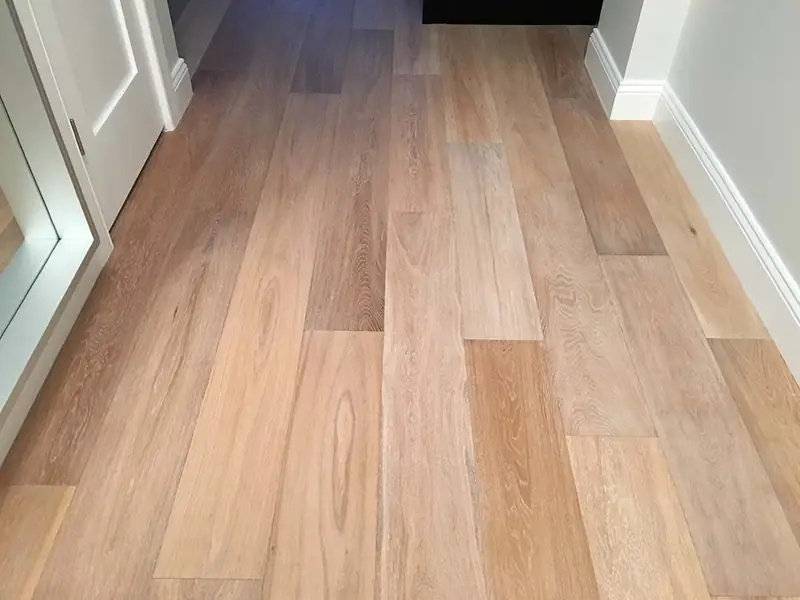
The same kinds of rooms exist in a co-op as in a house or any other apartment, and we cover every part of an interior renovation: kitchens, bathrooms, bedrooms, living rooms, floor and wall repair, tiling and much more, up to a full gut renovation. Cabinetry and built-ins are on our custom cabinets and storage pages.
Before you call us
- Ask the managing agent for the current alteration agreement and the work rules. You do not have to go to the board yet.
- Read what your proprietary lease says about alterations and repairs.
- Ask what the building charges: the processing fee, the deposits, and the amount for each day past the deadline.
- Ask about the permitted days and hours, and whether the building limits renovations to certain times of the year.
- Ask for the insurance requirements in writing, and whether the building requires contractors to show a license.
- If you are still buying the apartment, raise your renovation plans before you close. In an older co-op that you know will need work, consider sending the plans in with your purchase application.
You sign the alteration agreement, because it is a contract between you and the corporation. Bring it to us with whatever else the building gave you, and we take it from there.
Where we work
We renovate co-ops throughout Manhattan, uptown, midtown and downtown: Washington Heights, Hamilton Heights, West Harlem, Morningside Heights, the Upper West Side, Lincoln Square, the Upper East Side, Lenox Hill, Carnegie Hill, Sutton Place, Midtown East, Tudor City, Murray Hill, Kips Bay, Hell’s Kitchen, Chelsea, the Flatiron District, Union Square, Stuyvesant Town, Greenwich Village, the West Village, the East Village, SoHo, TriBeCa, the Lower East Side, the Financial District and Battery Park among them. The full list is on our service areas page.
Tell us about your co-op and what you want to change. Call us, or send the request form on our contact page.
Questions people ask
Do I need board approval to renovate my co-op?
For anything beyond painting and small cosmetic changes, expect to. A proprietary lease typically provides, in substance, that no alterations are made without the corporation’s consent, and yours is the one that decides. Removing or adding walls, electrical or plumbing work and full kitchen or bathroom renovations all need it. Even for small jobs, check with the building manager first.
What is an alteration agreement?
It is the contract between a shareholder and the co-op corporation that sets the terms for a renovation: the plans and their review by the building’s architect or engineer, fees and deposits, insurance, working days and hours, the completion date and who is responsible for damage and for upkeep afterward. Each building has its own; the New York City Bar Association publishes a model form.
How long does co-op board approval take?
It depends on the building: how quickly its architect or engineer reviews the plans, whether changes are asked for, and when the board acts. Nobody outside the building can promise that time. Ask your managing agent how the building handles it, and submit a complete package so that nothing has to go back and forth.
What insurance does a contractor need to work in a co-op?
Whatever the building’s agreement says. In the City Bar’s model form it is workers’ compensation and disability as the state requires, $1,000,000 of commercial general liability, $1,000,000 of automobile liability and a $3,000,000 umbrella, with the corporation, its officers, directors and shareholders, its engineer and the managing agent named as additional insureds. Boards can require more for a major renovation.
What hours can contractors work in a co-op?
The hours in the building’s work rules, which have to fall within the city’s limit of 7 am to 6 pm on weekdays. The model agreement allows work Monday through Friday, excluding holidays, between hours each building fills in. One of our clients wrote that his co-op allowed construction only from 9 am to 5 pm.
Who pays the building’s architect or engineer?
The shareholder. Under the model agreement the shareholder pays all fees of the corporation’s architect, engineer or attorney connected with the work, and the review deposit paid in at the start is only on account.
If the co-op later opens my new wall to reach a pipe, who pays to restore it?
Under the model agreement, you do. The corporation makes the repair that is its responsibility, and restoring the altered work afterward is the shareholder’s cost. This is one reason valves have to stay accessible.
Do you handle the board approval for me?
Yes. We take care of the design and construction, get the board approval and the architectural plans in order, and check back with your co-op during the job. You sign the agreement itself, since it is between you and the corporation.
Is Golden I Construction licensed, and is it insured?
Golden I Construction Inc holds Home Improvement Contractor license number 2019617-DCA from the New York City Department of Consumer and Worker Protection, which you can confirm with that department’s license check, and we are insured.