
Call Golden I Construction
An entertainment unit is the piece of cabinetry a living room is arranged around. It holds the television and the audio-video equipment, hides the wires, and gives the room shelves for books and for the things you want to look at. Golden I Construction designs and builds custom entertainment units in New York City, as built-in wall units or as freestanding entertainment systems. Fine cabinetry, built-ins and custom furniture, and entertainment and audio-video rooms, are among the services we provide under a single management.
Have a wall in mind? Call us to talk about an entertainment unit made to fit it.
What goes into a custom entertainment unit
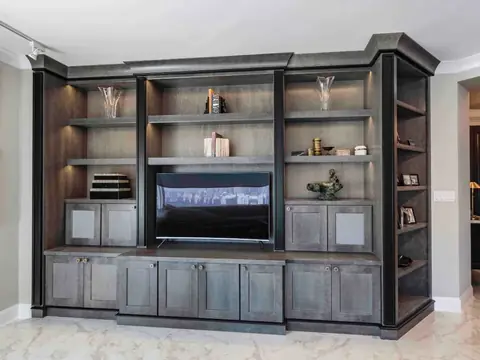
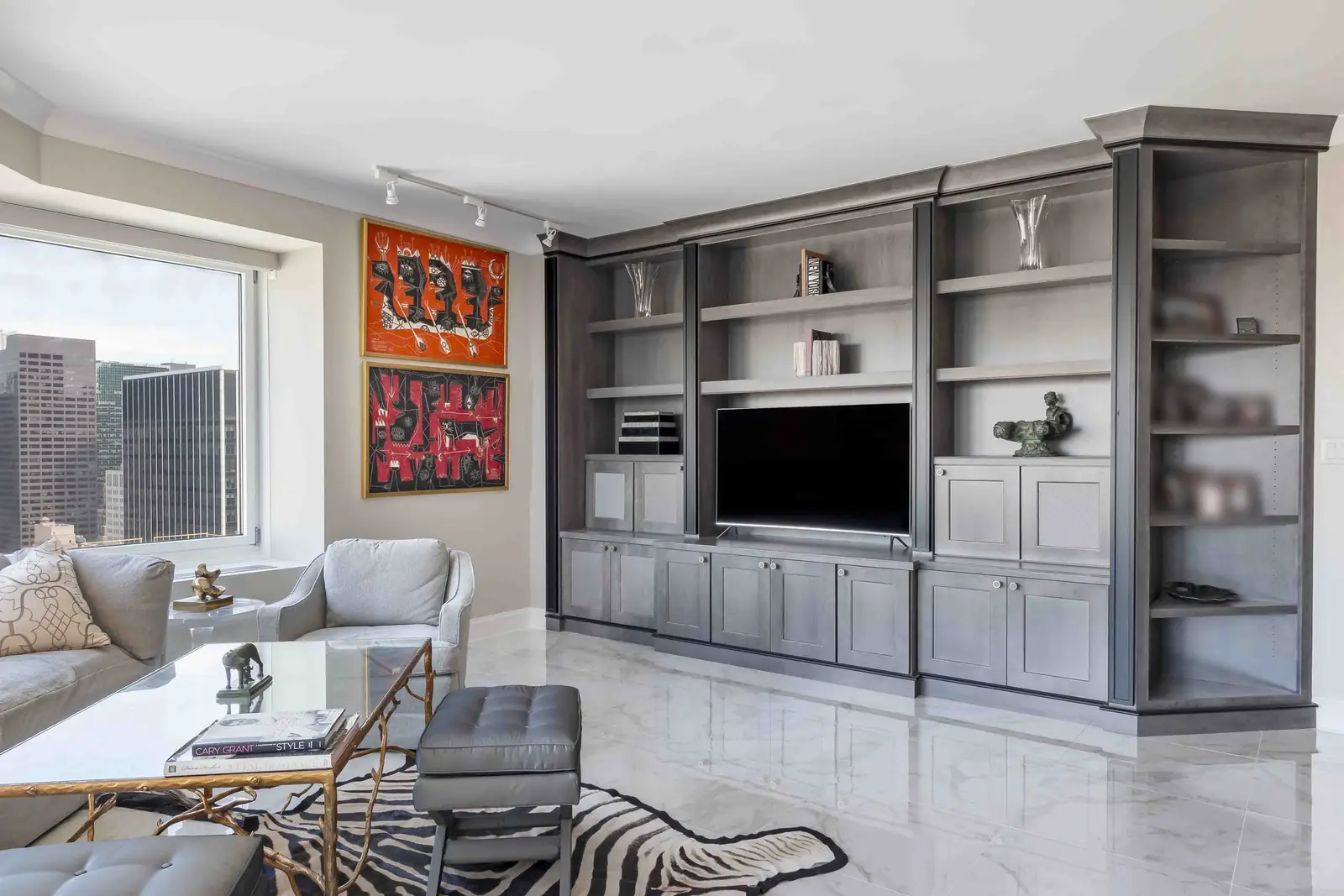
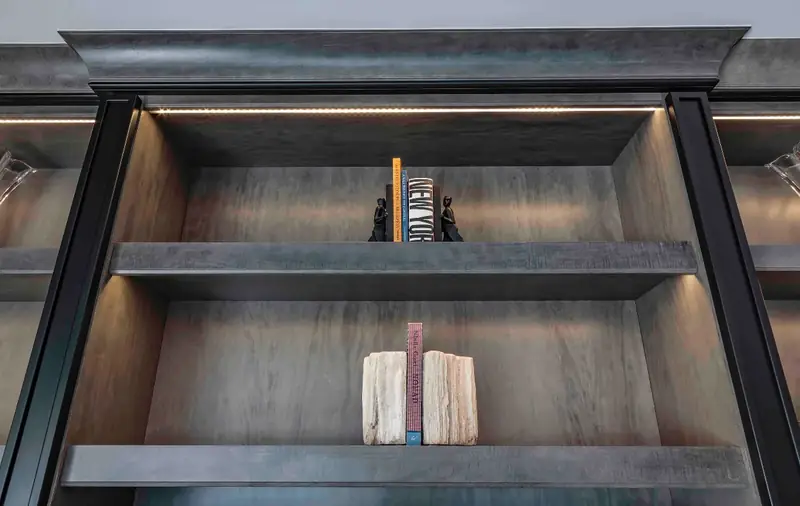
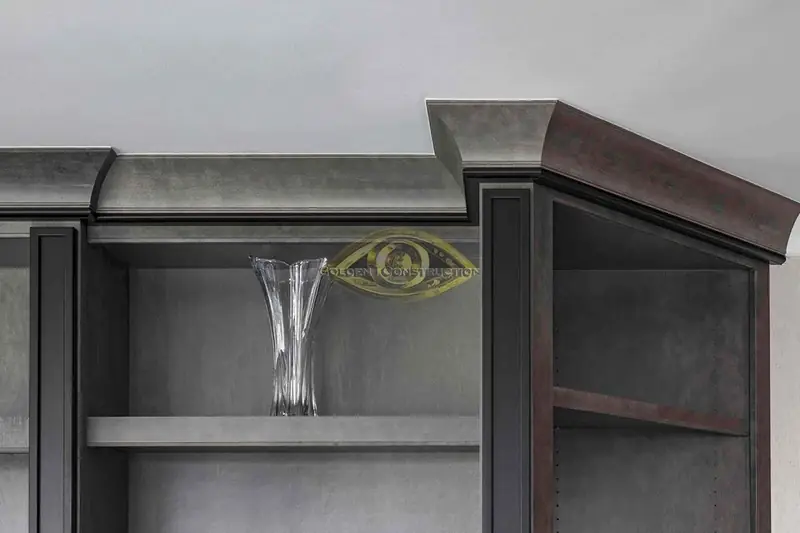
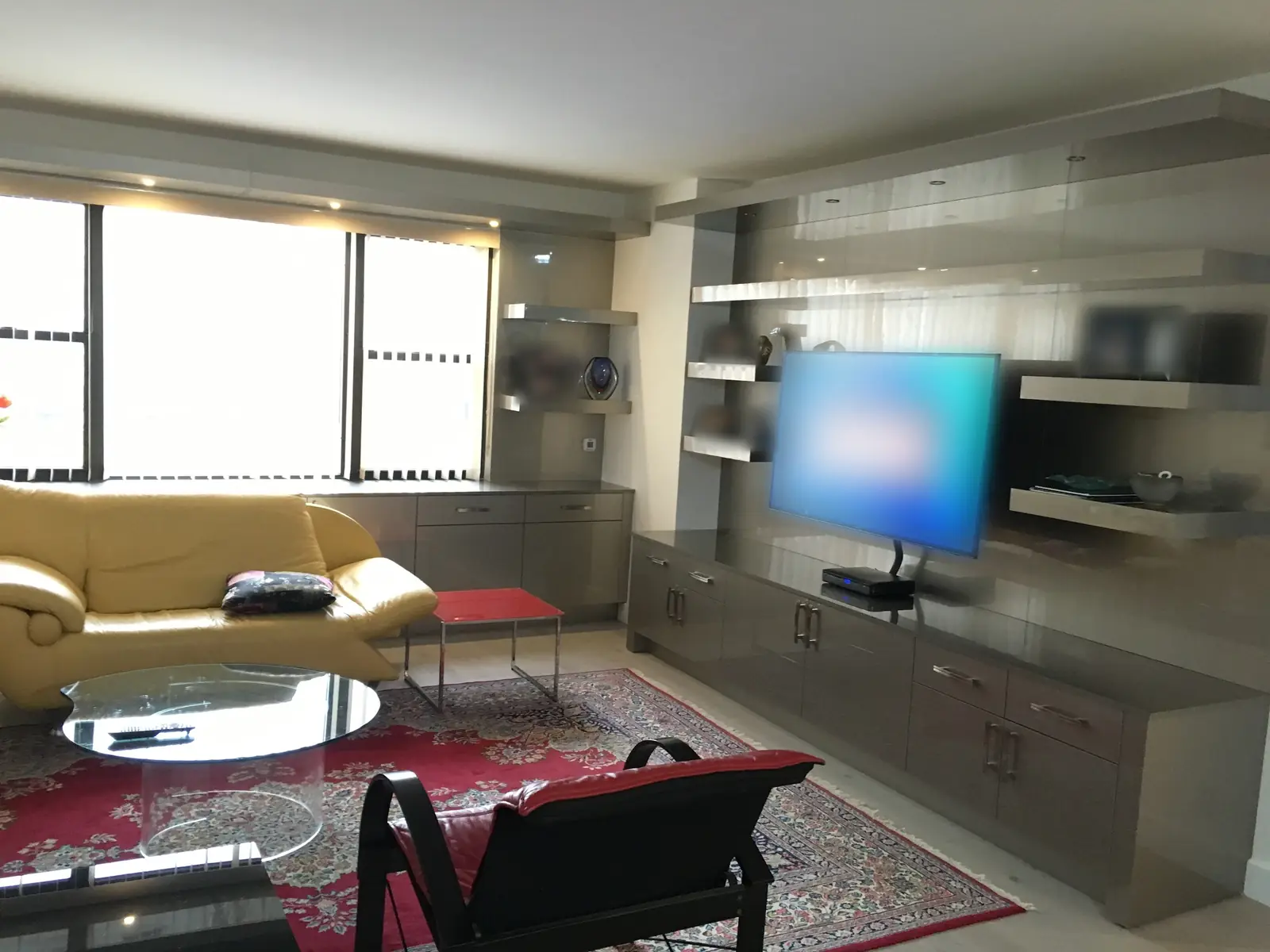
The wall unit in the photographs on this page shows the parts most units share. Closed cabinets run along the base. A central bay is sized for the television. Open shelves rise on either side and turn the corner at one end, a crown molding steps forward over each section, and light is set under the top of the shelves. Each of those parts is a decision:
- The television bay: sized for the set you own now and for the one you may buy next. A television can also sit on a pull-out or elevator shelf.
- Closed cabinets for the equipment, with a route for cables and a way for warm air to leave.
- Open shelves for books, collectibles and display, at heights that suit what you own.
- Lighting in the shelves. One of our clients describes wall-mounted shelving with puck lighting in his review below.
- Drawers and doors for everything that should be out of sight.
- The trim: base, crown molding and panels that tie the unit to the room.
Questions to settle before we draw
- How is the room used? For watching, for entertaining, for work, or for all three?
- What will the cabinets and shelves hold? Books, collectibles, audio-video equipment, a computer?
- Which pieces of equipment need a closed cabinet, and which do you want to reach every day?
- What should be on show and what should be hidden?
- What look do you want, and in which wood? Will the unit be visible from other rooms, and must it match a floor that is already there?
- What is on that wall today: outlets, a cable entry, a radiator, a vent, a pipe?
Wires, power and heat
Plan the wiring before the cabinetry is drawn. The unit needs power and signal where the equipment will sit, and a route for the cables between the television and the cabinets below it. The Department of Buildings says an electrical permit is required for most electrical work, and that the work must be performed by electrical contractors licensed by the department. Adding or moving outlets behind a wall unit is therefore work for a licensed electrician, and it is done before the cabinets go in. The department adds that when electrical work is done without a permit, the owner of the building may face violations and fines along with the person who did the work. Electronics give off heat, so a closed compartment needs a way for air to move through it.
Building a wall unit in a New York City apartment
The city’s Department of Buildings counts installing new cabinets among the minor work that needs no work permit, and notes that the contractor must hold a home improvement license from the Department of Consumer and Worker Protection. Golden I Construction Inc holds that license, number 2019617-DCA. Your building has its own say. The New York City Bar Association’s model alteration agreements for co-ops and condos begin with the building’s consent to any alteration or installed equipment, so ask your managing agent how your building treats a built-in before the design goes far.
The wall you have in mind may hold a radiator, a vent or a pipe. The model co-op agreement requires that all water, steam and gas valves remain accessible during and after the work, does not let an owner interfere with the building’s heating or air-conditioning system, and does not let an owner penetrate an exterior wall. A wall unit is designed around those things, with access panels where a valve sits behind the cabinetry.
A unit that fills a wall arrives in sections, because each one has to fit in the elevator and through the apartment door, and it is put together in the room. The rules a building sets for work hours, hallways and the service elevator, the city’s own construction hours and the federal lead-safe rule for homes built before 1978 apply to a wall unit as they do to any built-in. They are set out on our storage and closets page.
A built-in unit is fastened to the wall. If you prefer a freestanding piece, anchor it, and anchor the television that stands on it. The U.S. Consumer Product Safety Commission’s Anchor It campaign covers televisions as well as furniture. Its instructions are short: attach one bracket to the wall and another to the furniture or the television, connect the two with a strap, tighten it, and tug on the strap to be sure it holds.
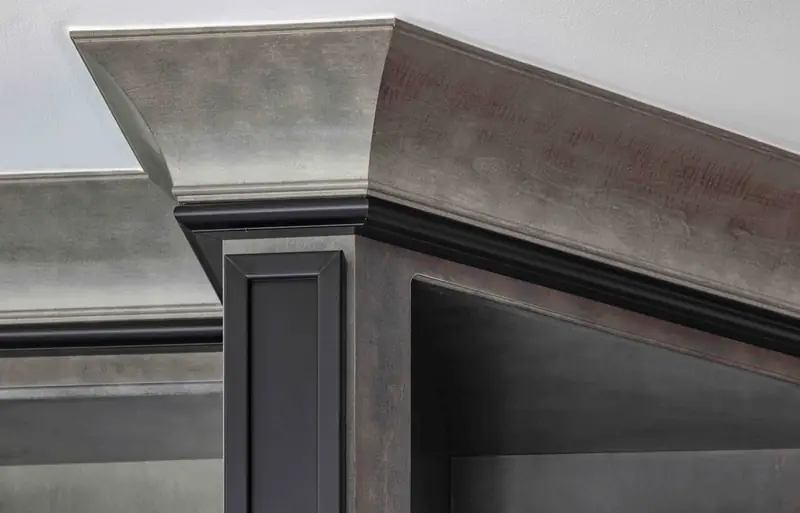
Wood, finish and detail
A wall unit can be built in any of the woods we use for cabinets, from oak, cherry, maple and walnut to mahogany, sapele, wenge and zebrawood, in solid wood and veneer. The species is selected on the basis of the finish you want: the wall unit at the top of this page is stained gray, with darker bands at its edges. Before you decide, ask us for wood samples, stained and unstained, and for drawings in as much detail as you need. Door styles and construction are explained on our custom cabinets page, and our showroom is seen by appointment.
How the work runs
- A first meeting, with pictures of units you like and a list of what the unit has to hold.
- Design. We recommend two to three weeks for the design of custom millwork, and a wall unit is no exception. Ask us about design fees, timelines and costs per revision.
- Drawings and wood samples for your approval.
- The building’s consent, where it is needed, and any electrical work.
- Installation, section by section, with the rest of your home protected.
I completed a full gut renovation of my open kitchen and living room with immaculately assembled cabinetry, backsplash, wall-mounted shelving with puck lighting and furniture pieces. Tony and his team from Golden I Construction were absolutely fantastic, working with incredible skill and precision (cutting and tailoring high-end finished italian pieces) but also with patience and professionalism that put my entire family at ease. My kids love them and we would highly recommend them to anyone who is looking for perfection!
For bookcases, closets and millwork in the rest of the home, see storage and closets. Living rooms we have renovated are in our general gallery, and whole-home work is on our apartment renovation page. When you have a wall and a list of what the unit must hold, call us or send the request form on our contact page.
Call us with the width of the wall and what the unit has to hold, and we will arrange a time to see the room.
Questions people ask
Do you build entertainment units to fit a particular wall?
Yes. Our cabinetry is custom-made, so a unit is designed for the wall, the television and the equipment it has to hold.
Do I need a permit for a built-in entertainment unit in NYC?
Installing new cabinets is on the Department of Buildings’ list of examples of work that needs no work permit. Electrical work, such as adding or moving outlets behind the unit, generally needs an electrical permit and a licensed electrical contractor. Your building’s own consent is a separate question.
Does my co-op or condo have to approve a wall unit?
Ask your managing agent before the design goes far. In the New York City Bar Association’s model alteration agreements, alterations and installed equipment need the building’s consent, and each building decides whether a wall unit comes under that. The model co-op form also keeps valves accessible and bars penetrating an exterior wall, which matters when a unit stands in front of either.
Can the wires and equipment be hidden?
Yes. Closed cabinets hold the equipment and a route for cables is built into the unit. Closed compartments also need a way for warm air to leave, which is part of the design.
Can an entertainment unit be freestanding?
Yes. Custom cabinets can be built in or made as a freestanding entertainment system or armoire. A freestanding piece should be anchored to the wall.
Which woods can I choose?
Any of the woods we build cabinets in, among them oak, cherry, maple, walnut and mahogany, and exotic woods such as sapele, wenge and zebrawood. The full list is on our custom cabinets page. Ask to see samples with and without stain or paint.
Can a unit be built over a radiator or in front of pipes?
It has to be planned around them. The model co-op alteration agreement requires that water, steam and gas valves remain accessible, and it does not let an owner interfere with the building’s heating system. A unit is drawn with access panels where a valve sits behind the cabinetry, and your building decides what it will accept in front of a radiator.