
Call Golden I Construction
A renovation site is a workplace inside someone’s home. The hazards are smaller than on a tower site and closer to hand: a ladder on an uneven floor, dust from a tile saw, old paint, a load coming off a truck. These are the rules we expect on a job, written for the people doing the work and for the owner who wants to know what a safe site looks like.
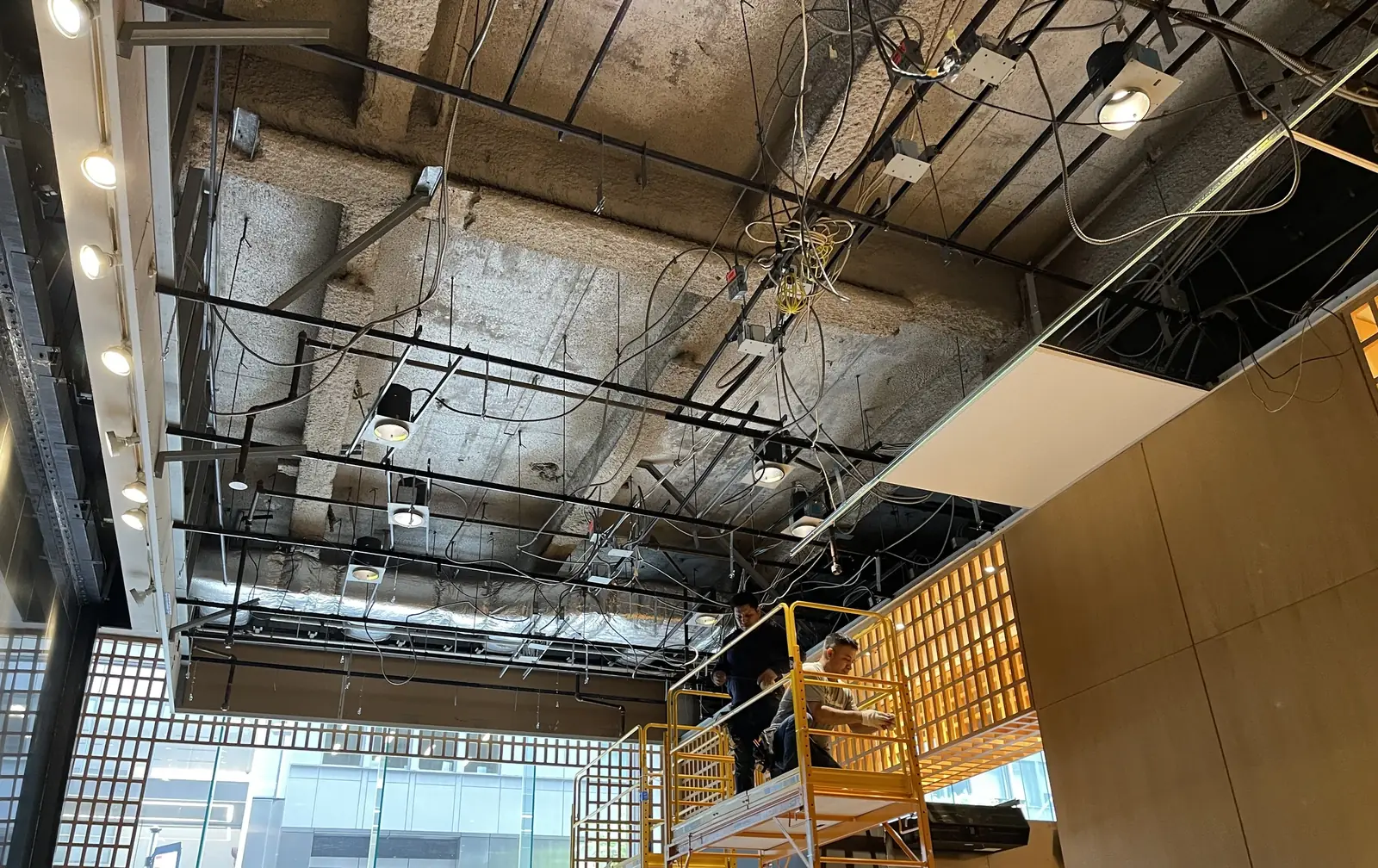
Falls come first
The Occupational Safety and Health Administration states it in capitals: falls are the leading cause of death in construction. In 2024 there were 389 fatal falls to a lower level among 1,034 construction deaths (OSHA). On an interior job the fall is from a ladder or a scaffold, and the agency’s advice is to plan the task, provide the right ladder or scaffold for it, and train everyone in setting it up and using it. On site that comes down to habits:
- Check boots and gloves for anything slippery and wipe it off before climbing.
- Get a firm foothold and handhold before pulling yourself up.
- Use a step ladder where you need one.
- Ask for help when you need it.
- Never rush or hop, going up or coming down.
- Wear a harness where the work is high enough that a slip means a fall.
Protective gear, used every time
Wear clothes that suit the task and the protection that goes with it: gloves and goggles with any tool that cuts, grinds or throws chips, nonskid footwear on slick surfaces and when carrying, and a mask or respirator wherever ventilation is poor or there is constant dust. Lift heavy things with a partner or a hand truck, not with your back alone. Keep gear and tools in a safe, dry place, and keep a first aid kit and a fire extinguisher close to the work. In a co-op the building may require it: the model alteration agreement published by the New York City Bar Association has the apartment owner maintain working fire extinguishers and smoke alarms throughout the job.
Dust is a hazard, not a nuisance
Three kinds of dust matter on a renovation in an older building.
- Silica, from cutting or grinding tile, concrete and mortar. OSHA’s construction standard controls it at the tool with water or a vacuum collector, and employers must not allow dry sweeping or dry brushing where wet sweeping or a HEPA-filtered vacuum can be used instead.
- Lead, from old paint. The federal renovation rule requires firms paid to disturb paint in homes built before 1978 to be certified. The city’s housing agency describes the practice: plastic sheeting on floors, daily cleaning by mop and HEPA vacuum, and surfaces free of dust before anyone moves back in.
- Asbestos, which some older building materials contain. For buildings put up before April 1987 the Department of Buildings requires an asbestos assessment by a certified investigator before it issues a permit.
Our own schedule for a kitchen or bathroom starts with dust isolation, protection for the surrounding areas and negative air pressure to keep dust out of the living space, and demolition ends with debris swept and vacuumed.
Loading and unloading
Equipment can roll or tip while it is being loaded or unloaded. Keep ramps straight and clear, leave room between yourself and the load, and use a co-worker as a spotter. Make sure a machine is clear of the ramp before turning it, check the clearance of the trailer deck, and tie loads down correctly. At an apartment building the route matters as much as the truck: deliveries and debris go by the service elevator at the times the superintendent sets, hallway floors are covered, and nothing is stored in the halls.
An occupied building raises the standard
Most New York renovations happen with neighbors at home. Before a permit can be obtained for work in a building with at least one occupied apartment, the contractor must submit a Tenant Protection Plan to the Department of Buildings. It covers exits, fire safety, dust and debris, lead and asbestos, structural safety, noise and working hours, and the heat, water, gas and electricity other residents depend on. City rules allow construction from 7 am to 6 pm on weekdays, and many buildings allow less.
The city’s Site Safety Training cards are aimed at larger sites. The Department of Buildings says workers for licensed home improvement contractors on minor alterations generally do not need one. The duty of care is the same.
What an owner should see
- Floors, the hallway and the elevator protected before the first tool comes in.
- A sealed dust barrier at the work area and no dry sweeping.
- Exits and stairs kept clear, and a fire extinguisher in the apartment.
- Tools and materials put away at the end of each day.
- The permit posted, where the work needs one.
How a job is organized has a great deal to do with how safe it is. Our pages on apartment renovation in NYC and our design and build process describe who runs the site, and our article on interior renovations step by step follows the order of the work.
Questions about how a job would be run in your building? Call us and ask.
Questions people ask
What is a Tenant Protection Plan?
It is a document the contractor submits to the Department of Buildings before a permit is issued for work in a building where at least one apartment is occupied. It sets out how residents will be protected: exits, fire safety, dust and debris, noise and hours, structural safety and essential services.
Do workers on an apartment renovation need a Site Safety Training card?
Generally not. The Department of Buildings says the requirement applies to sites that need a site safety professional, and that licensed home improvement contractors and workers on minor alterations are generally not required to hold the card.