
Call Golden I Construction
The cost of a kitchen renovation in New York City is decided mostly before any work starts: by whether the plumbing and the gas move, by how finished the plan is when the cabinets are ordered, and by how many decisions change after demolition. The habits below are the ones that hold the number where you set it. None of them needs you to buy cheaper materials.
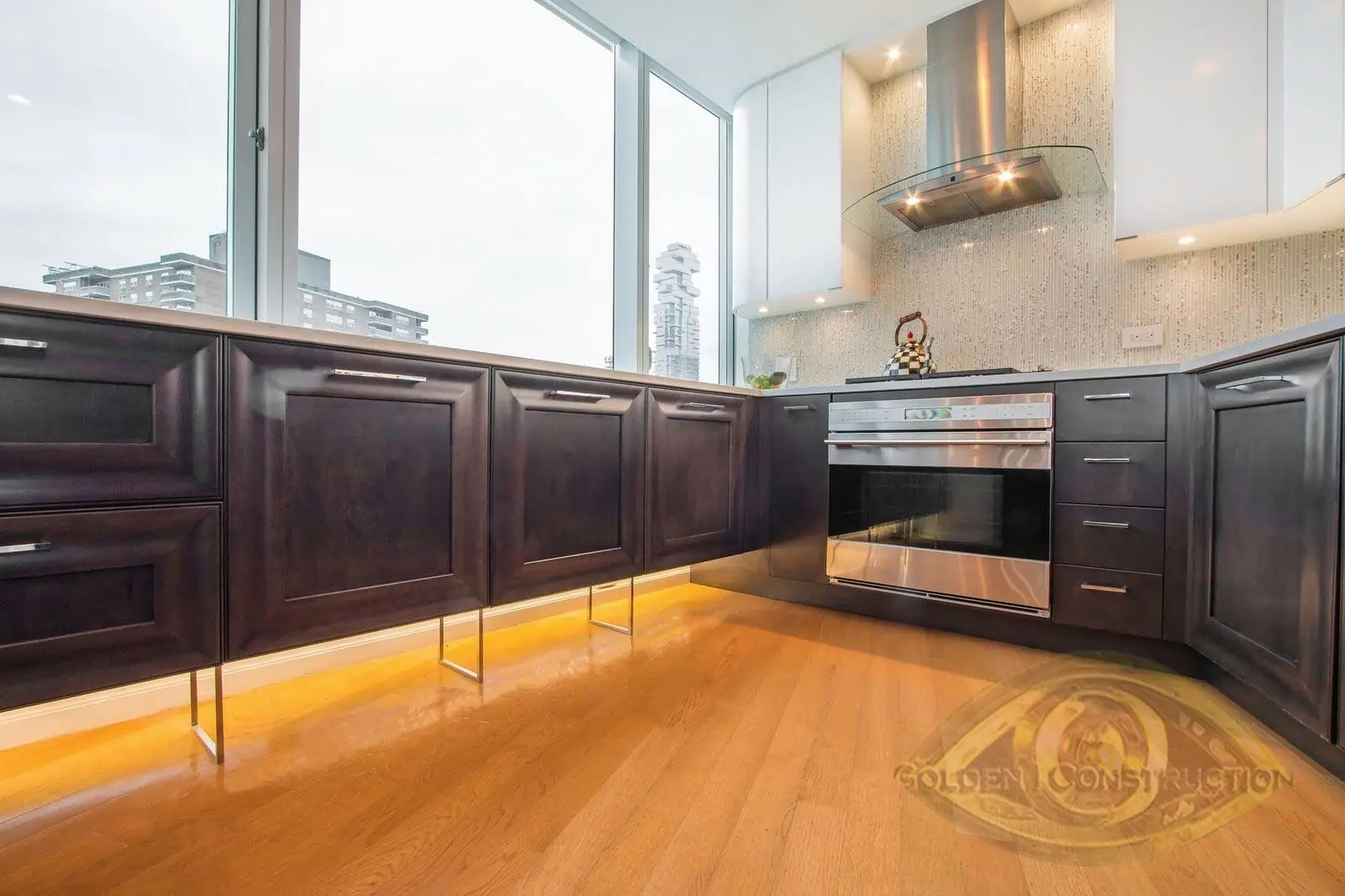
Set the budget to the apartment
Decide what level of kitchen the apartment calls for before you fall for a showroom display. A studio you may sell in five years and a family apartment you mean to keep for twenty deserve different kitchens. Look at how the building and the neighborhood are finished, decide how long you will live with the room, and fix a total. Then design to that total, not the other way around.
Work with the age of the building
Every building was put up in a style and with the methods of its time, and a kitchen that works against them costs more. In an old building the walls are rarely straight and the floor is rarely level, so allow for leveling and for cabinets fitted to the room. A design that respects the proportions and the trim of the apartment also tends to need less rebuilding around it than one that tries to erase them.
Leave the gas and the water where they are
This is the oldest advice in the first version of this article and still the most valuable. Moving a sink or a range is the point where a kitchen stops being a replacement and becomes a filed alteration. The Department of Buildings names rerouted gas pipes and added electrical outlets among the kitchen work that needs an application filed by a professional engineer or registered architect (NYC Buildings), and no gas appliance or gas pipe is installed or altered without a permit obtained by a licensed master plumber (NYC311). In a co-op the board may not allow the move at all. If the layout you have can be made to work with better cabinets, keep it.
Settle the floor plan before anything is ordered
Choose the appliances first, because their exact sizes fix the cabinets around them. Once cabinets are ordered, every change of mind is paid for twice: once for the piece that no longer fits and once for the delay. We report every change in an itemized list, with the change orders you approved, so the cost of a late decision is never a surprise. The cheapest change order is the one settled on paper.
Spend on what you touch every day
Do not economize on hardware. Knobs and pulls that suit the room, hinges that close softly and drawer slides that open fully cost little beside the cabinets they are fixed to, and you use them a hundred times a day. Replacing old hinges with modern ones takes time more than money, and it makes more difference than its price suggests.
Take the design help that is offered
A drawn layout costs far less than a mistake built in wood. Showrooms and designers can lay a kitchen out on a computer and show it to you from every side before a single cabinet is made. Use that. We offer in-house design services, and our cabinet showroom, seen by appointment, is where door styles and finishes can be handled before you commit.
Keep a reserve for what demolition finds
Old plumbing, tired wiring or a wall that is not what the drawings said only show themselves when the kitchen is opened. As a yardstick, the federal 203(k) renovation loan program requires a contingency reserve of 10 to 20 percent of the cost of the work for a building 30 years old or more (HUD). That is a lender’s rule, not ours, but it is a sensible range for a kitchen in a building of that age. If the reserve is not needed, it is the best money you never spent.
Know what the building will charge
A co-op or condo alteration agreement carries costs of its own. The model agreement published by the New York City Bar Association provides for a security deposit, a processing fee to the managing agent, a deposit toward the fees of the building’s architect or engineer for reviewing your plans, and a charge for each working day the job runs past its completion date (City Bar model agreement). Ask the managing agent for the agreement at the start and put those figures in the budget. A realistic schedule is the best defense against the daily charge, and our kitchen remodel timeline shows the stages a schedule has to hold.
For what makes up the price in the first place, see how much it costs to remodel a kitchen in NYC. How we plan and build is on our page about kitchen renovation in NYC.
Have a budget and want to know what it will build? Call us or send the request form and we will go through it with you.
Questions people ask
What is the most expensive mistake in a kitchen renovation?
Changing the layout after the cabinets are ordered. The second is deciding to move the sink or the range without first asking what the building and the Department of Buildings require, because that one decision brings drawings, filings and licensed trades with it.
Is it cheaper to keep the existing kitchen layout?
Almost always. The Department of Buildings says installing new cabinets needs no permit, while rerouting gas pipes or adding outlets needs an application filed by an engineer or architect. Keeping the sink and range in place avoids that whole layer of cost.
Can I save money by buying my own materials?
Sometimes, on items such as tile, lighting and hardware. Agree first who checks sizes and quantities, who receives and stores deliveries in a building with a service elevator schedule, and who pays if something arrives wrong or late.