
Call Golden I Construction
A closet works when it is built around what goes in it. So the first step in revamping one is to measure your clothes, not the closet. Do that, sketch the walls to scale, and the rods and shelves almost place themselves. Here is the method, with the details that matter in a New York City apartment, where the closet is usually small and often the only one.
Measure what hangs and what folds
Take everything out. Put the hanging clothes, still on their hangers, in two piles: short items such as shirts and jackets, and long items such as coats, dresses and trousers hung full length. Measure the height of each group. Those two numbers tell you how much of the closet needs a single high rod and how much can take two rods, one above the other.
Then stack what folds. Sweaters and jeans sit well in stacks about 10 inches high, and each stack needs about 14 inches of shelf. Count the stacks and you know the shelf length to build.
Draw the closet to scale
Measure each wall’s width and height and sketch the layout on graph paper, one wall at a time, starting from the left. Note anything odd: a sloped ceiling, a soffit, a pipe, a radiator, a wall that is not square. Older buildings have plenty of these. Mark where the door is and how far it swings.
Rods and shelves
- Depth: a reach-in closet works best at 24 to 30 inches deep, and 24 inches is the usual depth, so hangers clear the back wall and the door.
- Double hanging: common guides put the upper rod a little under 82 inches from the floor and the lower one at about 40 inches. Check both against your own short pile.
- Single hanging: a rod at about 66 inches suits long items. Check it against your longest coat.
- Shelves: set one a few inches above each rod, and a high shelf for things you use least. Mark each shelf’s depth on the drawing.
- Make each rod only as wide as that part of your wardrobe needs. Space left over is better spent on shelves or drawers.
Shoes
Open shelves without dividers hold the most shoes. To squeeze in one more pair per shelf, alternate them, one toe out and the next toe in. Plan the shoe shelves first, low in the closet, then fit the rods around them.
Walls that will not hold a screw
Old plaster in poor condition is a weak anchor for a loaded rod. The fix is to line the closet with three-quarter-inch hardwood plywood screwed to the studs. After that, rods and shelves can go wherever the drawing says, not just where there happens to be framing.
Doors
Standard double doors are best where there is room to swing them, because they open the whole closet at once. Where there is not, skip sliders, which always hide half the closet, and choose solid-core or solid-wood bifold doors on heavy-duty hardware. Light doors on cheap fittings wobble and jump their tracks.
Out-of-season clothes
A house has an attic or a dry basement corner for these. An apartment has the high shelf, the space under the bed and, in some buildings, a storage room. Use bins and label them, so the one thing you need in the wrong season can be found. If another room can spare the floor, a rolling rack makes the twice-yearly swap quick.
Fitted by hand or built in
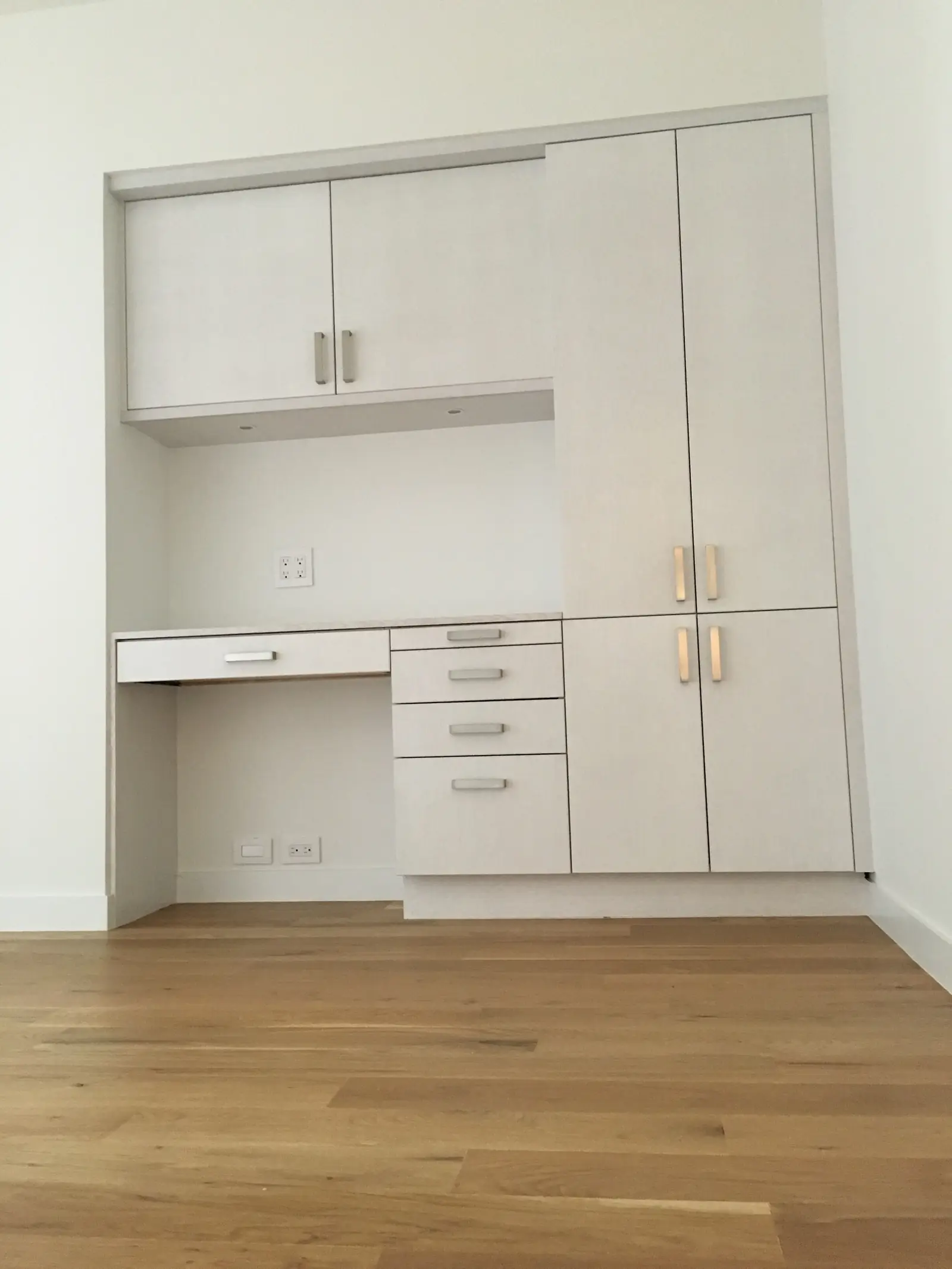
A wire or laminate kit handles a plain closet on a small budget. Built-in closet cabinetry is worth it when the space is awkward, when you want drawers and doors that match the room, or when one closet has to hold everything. We build custom closets and storage as part of our millwork; see custom storage and closets and custom cabinets and the showroom. In a co-op or condo, ask the managing agent whether the building wants notice of the work: the Department of Buildings lists installing new cabinets among the minor alterations that need no work permit, but a building’s own rules still apply.
If the closet is part of a larger job, our apartment renovation in NYC page explains how the pieces fit together, and our tips on making the most of a small NYC apartment cover storage in the other rooms.
Want a closet built for what you own? Call us or send the request form with the closet’s measurements and a few photos.
Questions people ask
How deep should a closet be?
A reach-in closet for hanging clothes works best at 24 to 30 inches deep. At 24 inches, a hanger with a coat on it clears both the back wall and the door.
How high should closet rods be?
Common guides put a single rod at about 66 inches from the floor, and a double-hung pair at just under 82 inches and about 40 inches. Measure your own clothes on their hangers first, since the right height is the one that fits them.
Are sliding closet doors a good idea?
They save floor space but only ever open half the closet. Where there is no room for swinging doors, sturdy solid-core bifolds on heavy-duty hardware give better access.