
Call Golden I Construction
The style of a New York City kitchen and the renovation behind it come down to six decisions: what the building gives you to work with, how much that is modern goes into it, the color, how a small room is used, the greener options, and who builds it. Style follows from the first of them. Here is each in turn, with what it means on the job.
Start from what the building gives you
Exposed brick, industrial elements and an inventive use of space are what people picture when they think of a New York kitchen. That picture comes from the loft. Most of the city’s kitchens are somewhere else, in a pre-war apartment, a post-war apartment or a townhouse, and each asks something different of a renovation. Our piece on NYC kitchen styles by kind of building matches a style to each. The points here are about the work.
- Pre-war apartments. Expect old wiring and plumbing, and walls and floors that are not flat. Paint in a home built before 1978 may contain lead, and the federal rule requires certified firms for paid work that disturbs it.
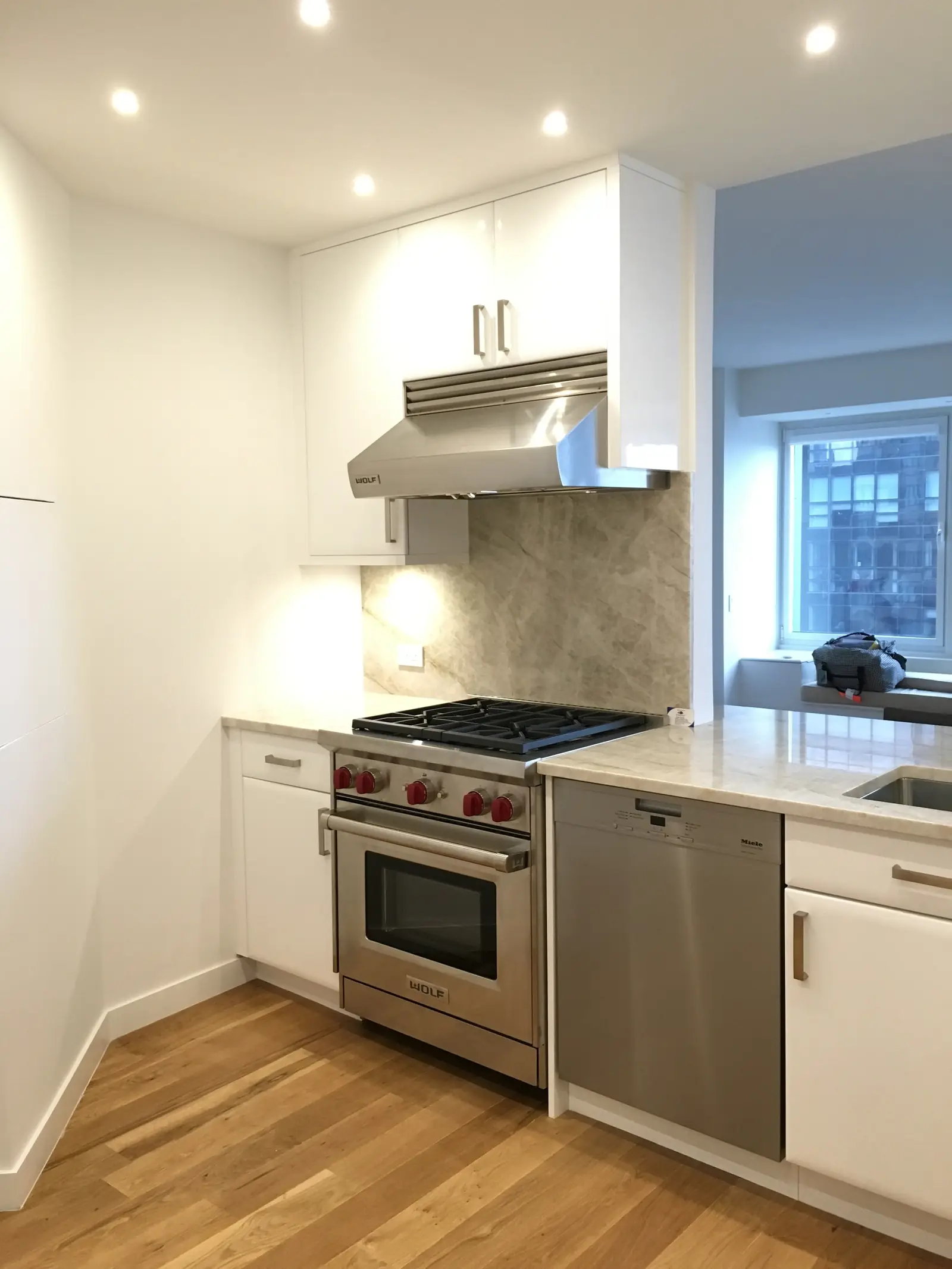
- Post-war apartments. The ceiling is lower, so avoid anything that hangs down from it. Run the wall cabinets to the ceiling, light the counter from under them, and consider opening the kitchen to the dining area with a peninsula if the wall between them can be removed.
- Lofts. The kitchen stands in the living space and is seen from every side. Take the range hood seriously, because cooking smells have a whole apartment to fill, and remember that hard surfaces carry sound.
- Townhouses and brownstones. You own the whole building, so there is no board, and pipes and vents can be routed through your own floors and walls, always by licensed trades and under permit. The limit is the outside. In a historic district the Landmarks Preservation Commission reviews most changes to the front and rear facades, so a new door or a wider window from the kitchen to the garden goes through its review.
Two rules follow the age and standing of the building, whatever its kind. For a building put up before April 1987, the city requires an asbestos assessment before a permit. And if the building is a landmark or lies in a historic district, the Landmarks Preservation Commission must issue its own permit for any interior work that needs a Department of Buildings permit (Landmarks Preservation Commission).
Mix modern into traditional with restraint
Stainless steel appliances, smart controls and clever storage belong in any kitchen, in an old building or a new one. Choose them for what they do, and let the cabinets and counters carry the style. In an older apartment that usually means keeping the modern parts quiet: appliances set flush with the cabinets, lighting hidden under them, and nothing on show that will look dated before the cabinets do.
Pick the palette for the room you have
Bold, lively colors and quiet, minimal ones can both be right. Weigh your own taste, the light the room gets and the mood you want. A kitchen with one small window takes a pale palette more easily than a dark one. Put strong color where it can be repainted, on the walls, an island or painted doors, and keep the counter and the floor calm, because those are the surfaces you will not want to redo.
Make a small kitchen work before it looks good
Storage built to the ceiling and a layout planned around how you move matter more than finishes. The National Kitchen and Bath Association recommends a work aisle at least 42 inches wide for one cook. Many apartment kitchens have less, which is the reason to draw the room to scale before you choose anything for it. If your kitchen is the long narrow kind, read our NYC galley kitchen ideas.
Choose the greener option where it costs little
ENERGY STAR says induction cooking can be upwards of three times more efficient than gas, and that electric cooking, because it burns no fuel in the room, contributes to better indoor air. Efficient appliances and lighting are easy choices when everything is being replaced anyway. Recycled and reclaimed materials are worth a look where they are also hard-wearing.
Check who will build it
Look at credentials, ask to see finished kitchens and make sure you will have one person to talk to. In New York City a contractor needs a Home Improvement Contractor license for residential work costing more than $200, and you can check it with the Department of Consumer and Worker Protection. Gas piping is altered under a permit that only a licensed master plumber can get, and most electrical work needs an electrical permit, so ask who those two trades will be.
For the job itself, see kitchen renovation in NYC; for the two kinds of building with the most rules, co-op renovation and townhouse renovation. Finished kitchens are in our kitchen gallery.
Tell us what kind of building you live in and what you want the kitchen to be. We will show you what suits it and what it would take to build.
Questions people ask
Do I need Landmarks approval to renovate my kitchen?
Only if your building is a landmark or stands in a historic district. In that case the Landmarks Preservation Commission requires its own permit for interior work whenever the work needs a Department of Buildings permit, and it reviews most changes to the outside of the building.
Is induction cooking worth choosing in a New York kitchen?
On efficiency, yes: ENERGY STAR says induction can be upwards of three times more efficient than gas, and that electric cooking contributes to better indoor air. Whether your apartment’s wiring can carry it is a question for a licensed electrician, and in a co-op or condo for the building as well.