
Call Golden I Construction
Every feature in a kitchen is a small bargain. It gives you something, and it asks for something back in cleaning, in space or in wiring. These seven come up again and again when a kitchen is planned. For each, here is what you get and what you owe.
Concrete and concrete-look counters
What you get: a plain, industrial surface with more character than a factory finish. What it asks: real concrete is heavy, is cast to order and is porous, so it has to be sealed and resealed, and it will pick up marks that some owners enjoy and others regret. If you want the color without the upkeep, quartz and porcelain are made in concrete tones. Marble, granite and quartz remain the other choices to weigh it against.
Handmade tile
What you get: a backsplash or floor where no two pieces match. Terracotta and other handmade tiles vary in color from piece to piece, so a single white can hold grays, pinks, creams and blues. What it asks: wider grout joints, a tile setter with patience, sealing where the tile is unglazed, and an order placed all at once with spares, because the next batch will not be the same.
Connected appliances
What you get: a refrigerator with a screen for the family calendar, ovens you can start from your phone, a bin that adds to the shopping list. What it asks: an outlet and often a circuit of its own where each appliance stands, a wireless signal that reaches the kitchen, and the acceptance that the software will age faster than the steel. New circuits and outlets are a licensed electrical contractor’s work, and the Department of Buildings gives rerouting gas pipes and adding electrical outlets as an example of a renovation that needs a filed application (NYC Buildings), so decide on appliances before the walls are closed.
Concealed storage walls
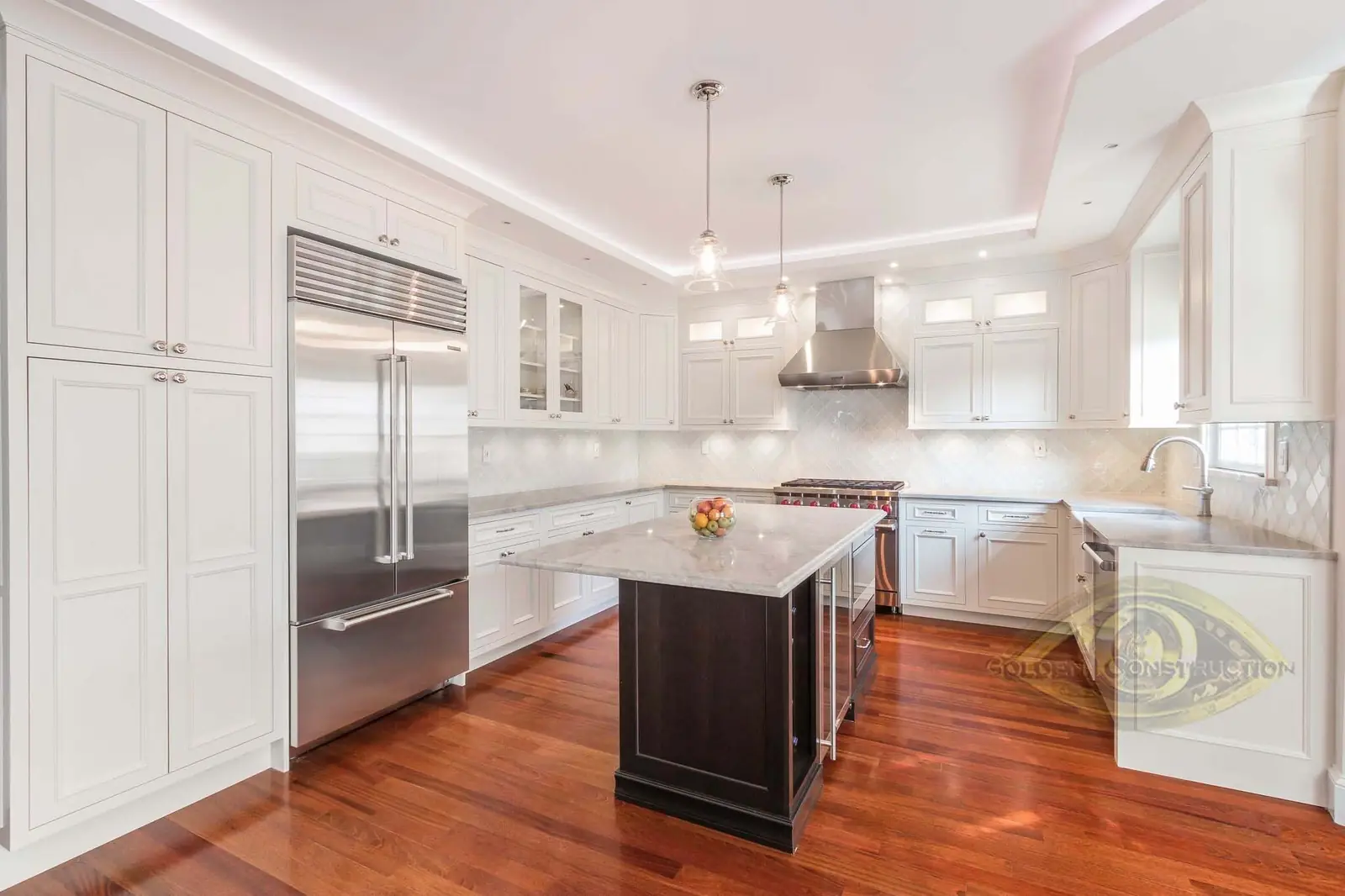
What you get: a calm wall of flat doors, floor to ceiling, with the pantry, the small appliances and sometimes the refrigerator behind it. In an open apartment it lets the kitchen step back when you are not cooking. What it asks: depth, and very precise building. A long run of flat doors shows every uneven gap, which is why this is made-to-order work.
White
What you get: white cabinets and walls brighten a room and make a small one look bigger than it is. What it asks: white shows every mark near the handles and the range. Choose a finish that wipes clean, and vary the textures, a matte wall against a glazed tile for example, so the room does not go flat.
Gloss finishes
What you get: sheen is the amount of light a painted or stained surface reflects, and a high sheen throws light around a small kitchen and draws the eye. What it asks: gloss shows fingerprints, and it shows every flaw in the surface beneath it. It rewards careful preparation and regular wiping. A lower sheen forgives more.
An island
What you get: more counter, room for a second sink, a place to eat, and somewhere for the children to do homework while you cook. What it asks: floor area, since the aisles around it need their width, and a way for water, power or gas to reach it through the floor. Our article on kitchen islands gives the clearances to measure before you fall for the idea.
How to use this list
None of these is a mistake and none is free. Pick the two or three whose price you are glad to pay, and let the rest go. You can see how the choices look in finished rooms in our kitchen gallery, handle finishes at the showroom described on our custom cabinets page, and read how a project is planned under kitchen renovation in NYC.
Weighing features for your own kitchen? Call us and we will tell you what each would take in your room.
Questions people ask
Do concrete countertops need sealing?
Yes. Concrete is porous, so it is sealed when it is made and resealed through its life. Even sealed, it can mark with use. If that worries you, a concrete-colored quartz or porcelain gives a similar look with less care.
Is a white kitchen hard to keep clean?
It shows marks sooner than a mid-tone does, mostly around handles and beside the range. A finish that wipes easily and good lighting, so you can see what needs wiping, make it manageable.
Are smart appliances worth it?
If you will use the feature weekly, yes. Decide before the electrical work is planned, because each one needs power in the right place, and judge the appliance on how well it cooks or cools before its software.